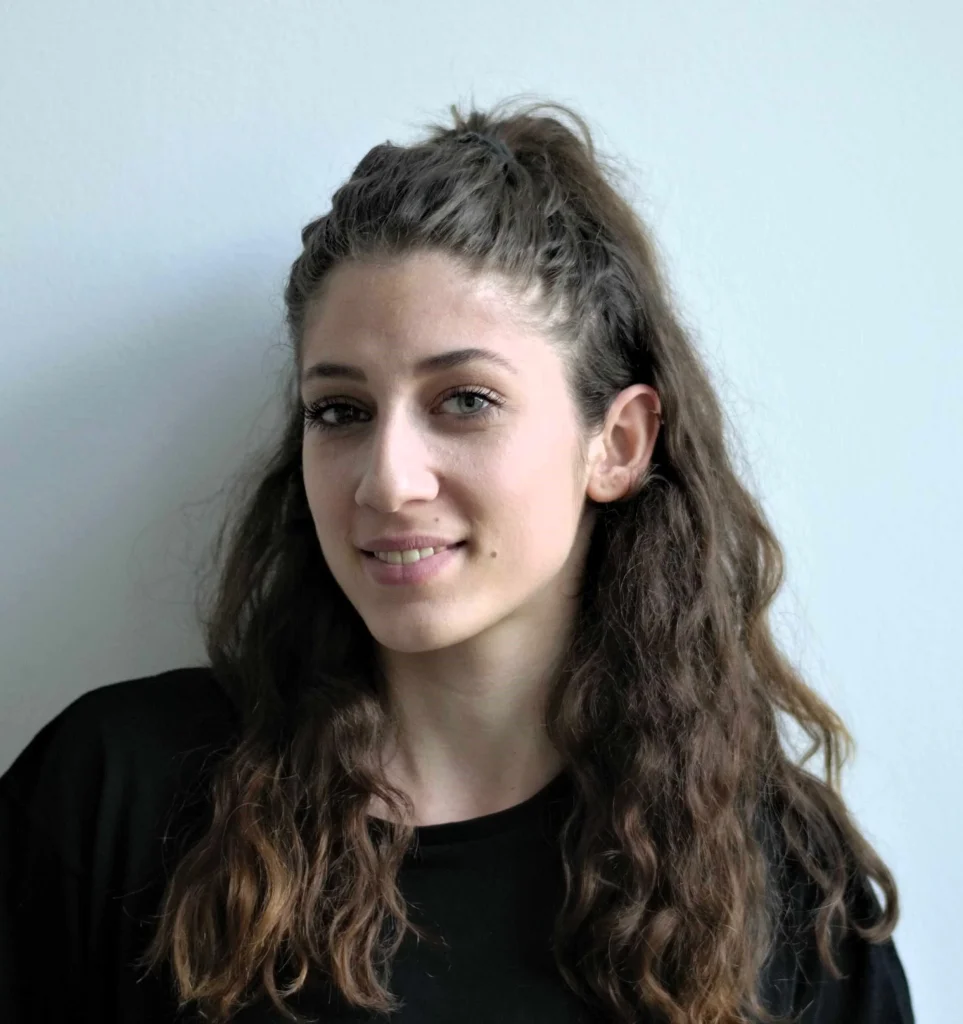
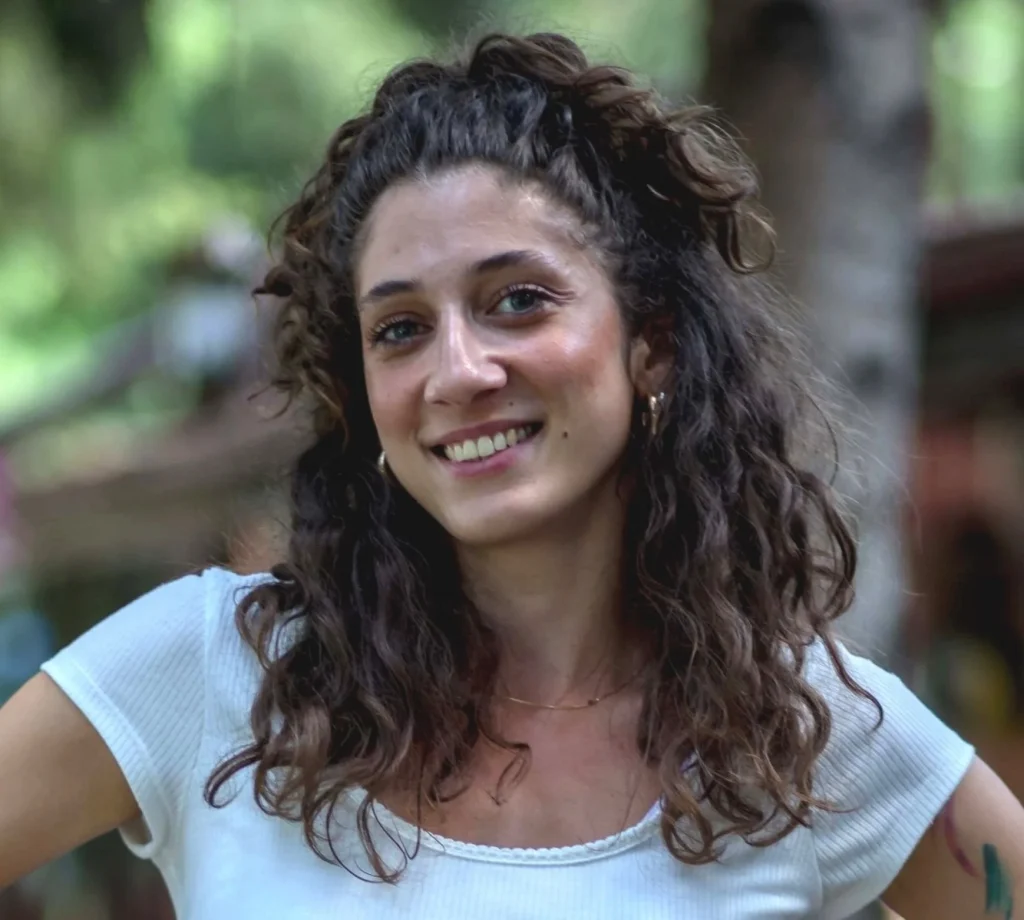
We’re thrilled to introduce Lilla Eredics, our Resource Distribution Coordinator for the Romani Program and a community organizer and anthropologist specializing in the lived experiences of gendered and racially marginalized communities.
Based in Budapest, Hungary, Lilla has worked extensively with Romani communities, with a particular focus on Romani women’s networks and sexual and reproductive health and rights.
With more than a decade of experience, she excels in designing, implementing, and overseeing development programs related to human rights, civil society, community work, and education, with a strong emphasis on Monitoring, Evaluation, and Learning practices and methodologies.
Lilla’s expertise in ethnographic research and critical theories is currently applied at research project at HUN-REN Centre for Social Sciences, where she explores the transformative role of arts in education for marginalized communities. Her research is not only academic but also aims to foster tangible, positive changes in educational practices.
“Solidarity must go beyond performative inclusion — it requires structural shifts that recognize and address intersecting forms of oppression, while centering Romani self-determination, collective care, and movement-led solutions.”
— Lilla Eredics
Lilla, when you think about solidarity with Romani movements, what does it really look like — beyond just symbolic gestures or performative inclusion?
Too often, actions framed as support for Romani communities in the region have relied on top-down approaches, where Roma are invited into pre-existing structures as symbolic participants. These efforts rarely challenge the power dynamics that exclude Romani people from shaping agendas that affect their lives. For Romani movements, solidarity means centering the leadership, knowledge, and lived experiences of Romani people — particularly Romani women, queer people, and other systematically excluded groups within the community. It’s about co-creating strategies, redistributing resources and decision-making power, and committing to long-term, trust-based relationships rather than short-term project visibility. Solidarity must go beyond passive inclusion — it requires structural shifts that recognise and address intersecting forms of oppression, while centering Romani self-determination, collective care, and movement-led solutions.
How do Romani organisers navigate both state oppression and racism within broader civil society?
While navigating racialized and bureaucratic funding systems — alongside the racism, exclusion, and paternalism embedded in mainstream civil society and NGO spaces — Romani organizers are building parallel infrastructures of survival, care, and collective resistance. These grassroots efforts often remain underfunded and undervalued — especially when they challenge dominant narratives or reject tokenistic engagement.
If we are truly committed to building inclusive, antiracist, and feminist organising ecosystems, grassroots Romani organisers must be at the centre of coalition-building — not treated as symbolic partners. This means resourcing their work on their own terms, supporting their strategies of resistance, and ensuring they hold real power within coalitions, not just seats at the table.
What forms of community-based knowledge do Romani women organizers contribute to intersectional justice work?
Some of the most transformative lessons I’ve learned come from Romani women organizing within their own communities — not to “fix” or assimilate them into dominant systems, but to sustain and strengthen them through deeply rooted, lived knowledge. These organizers understand what it takes to uphold social reproduction and collective care in the face of structural violence, racism, and erasure.
This is not peripheral knowledge — it is movement knowledge: pragmatic, relational, and grounded in everyday realities. It holds the power to radically reshape how we understand and practice justice across intersecting systems of oppression.
What can intersectional movements across CEECCNA regions learn from Romani ways of organising and care?
There is a lot to learn from Romani organising, particularly in how it centers care, responsibility, and relationality — all of which are often undervalued in mainstream movement cultures. What is considered “valuable” — and who is considered valuable — is often shaped by racialized, classed, and gendered norms, and Romani people rarely fit into those frames.
Organising in Romani communities invites us to unlearn dominant assumptions about what counts as activism. Care work, mutual aid, and everyday survival strategies often go unrecognised in dominant organising spaces, yet they are central to how many Romani communities build resilience and sustain each other.
These approaches offer essential lessons on how to center life-affirming practices, navigate structural abandonment, and build movements that are accountable to the lived realities of those most impacted by exclusion, dispossession, and systemic injustice.
What does equitable and participatory resource distribution look like to you, based on your lived experience and organizing background?
To me, it means radically unlearning dominant ideas of care, inclusion, and solidarity — moving beyond abstract notions of equality toward practices that address structural injustices and power imbalances. Equitable distribution means recognizing who is holding invisible labor, who has access to safety and stability, and who is systematically excluded — and redistributing resources in ways that reflect those realities.
It also means welcoming conflict, tension, and contradiction as part of collective processes, rather than seeking comfort or frictionless consensus. True participation isn’t about being invited to approve decisions already made — it’s about co-creating from the beginning, shaping the priorities, timelines, and terms of engagement. It’s slow, messy, and deeply political — and that’s exactly what makes it transformative.